
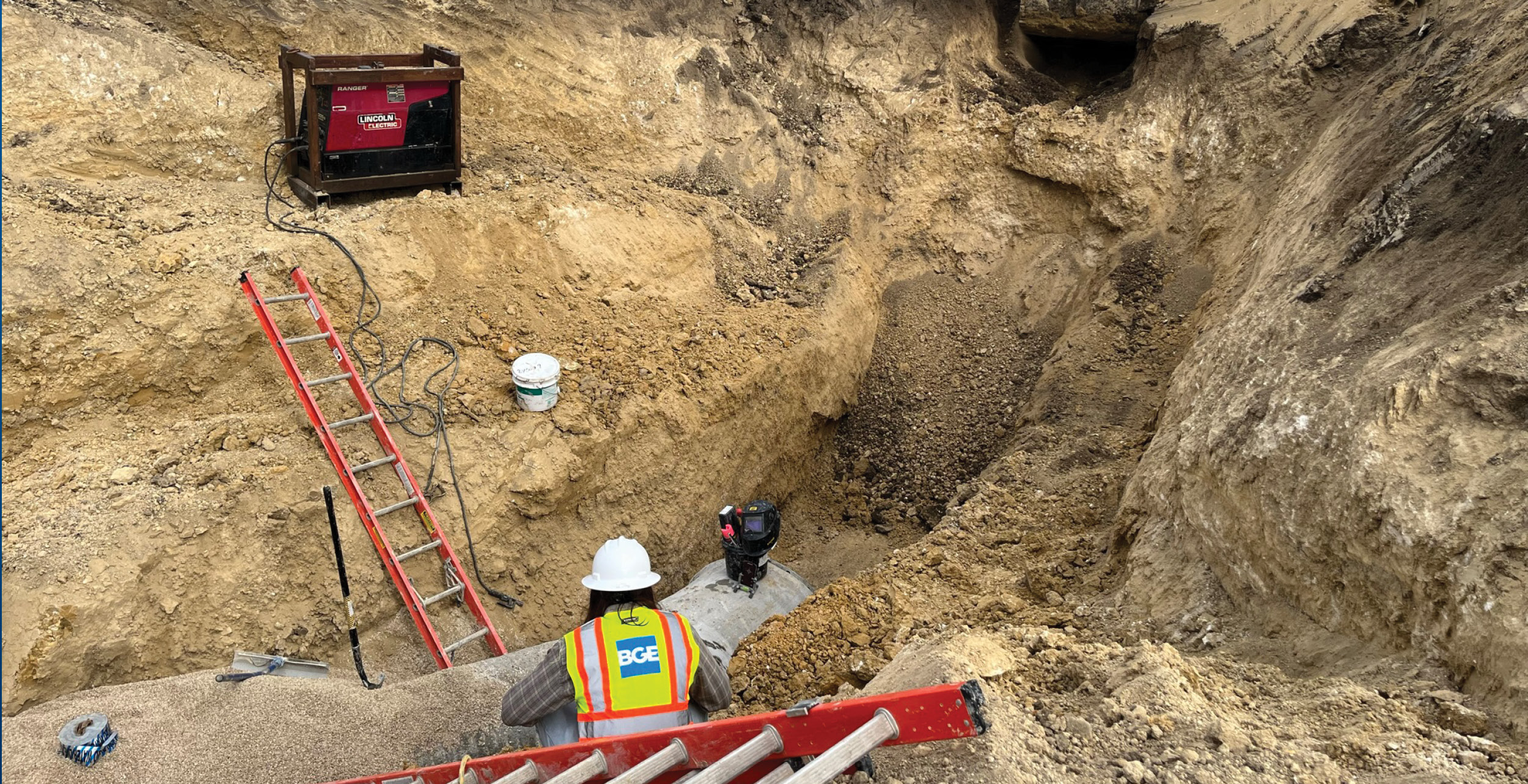
Inside the planning, problem-solving, and partnerships behind ARWA’s Phase 1B Segment C
Central Texas is a region defined by momentum. New homes rise where open fields once stretched for miles, and communities that were once small towns are now vibrant hubs of growth. But behind that rapid expansion was a challenge that couldn’t be ignored: the need for a reliable, long-term water supply. When the Alliance Regional Water Authority (ARWA) set out to secure that future, BGE was entrusted with helping bring one of its most important components to life — Phase 1B Segment C, a 22-mile treated water pipeline connecting Maxwell to the Cities of Buda, Kyle, and San Marcos.
Innovative Engineering for a Growing Region
From the earliest planning stages, it was clear that this pipeline needed to serve both the present and the future. The BGE team evaluated materials, modeled long-term demand, and studied how the system would behave under a range of operating conditions. Those insights shaped decisions that would define the project’s success – from selecting pipe diameters that could support decades of growth to choosing concrete steel cylinder pipe for its durability, availability, and cost efficiency.
As the region’s needs evolved, so did the project. When the City of Kyle faced the possibility of development delays due to water shortages, the team re-sequenced construction to deliver water earlier than originally planned. That flexibility ensured that growth could continue without interruption.
Complex Challenges, Tailored Solutions
Building a pipeline across multiple jurisdictions is never simple, but this project presented a unique set of challenges. The alignment crossed major highways, railroads, and dense utility corridors, each requiring a specialized approach. Trenchless construction methods — micro tunneling, jack-and-bore, auger boring, and hand mining — became essential tools for navigating these obstacles while minimizing disruption to the public.
The work extended far beyond the trench line. More than 120 easements had to be acquired, each requiring careful coordination with landowners. Environmental restoration efforts brought riparian areas back to life. And throughout construction, the team adapted to changing land-use conditions, shifting traffic patterns, and the realities of building in a region growing faster than the project itself.
Even during testing, the project continued to evolve. Acoustic leak detection revealed minor joint issues caused by soil movement — issues that were quickly addressed with targeted repairs. Those findings didn’t just strengthen the pipeline; they informed future ARWA design standards, leaving a lasting impact on regional infrastructure.
Infrastructure That Strengthens Communities
The true measure of this project isn’t found in its length, its crossings, or its technical achievements. It’s found in the people it serves. Today, more than 250,000 residents rely on the water delivered through Phase 1B Segment C. The pipeline supports new housing, fuels economic development, and reduces strain on existing systems — helping communities grow with confidence.
Environmental stewardship was woven into every decision. Sensitive habitats were protected through trenchless construction. Disturbances were minimized through careful route planning. And materials were chosen with longevity and sustainability in mind.
BGE delivered a delivered a design and execution strategy that met ARWA’s goals, providing reliable water infrastructure for our member communities. Their collaborative approach and technical expertise ensured this critical project could move forward smoothly and with strong community support.
Graham Moore, PE, Executive Director for ARWA
A Model for Infrastructure
Phase 1B Segment C was completed on schedule and under budget, a testament to the teamwork, planning, and shared commitment that defined the project. But its impact extends far beyond its completion date. The lessons learned (geotechnical conditions, construction phasing, stakeholder coordination, and system resilience) are now shaping future ARWA segments and regional water initiatives.
The pipeline was designed with tomorrow in mind. It anticipates future tie-ins, dual-pipeline expansion, and increased demand through 2050, ensuring that the region’s water supply can grow alongside its communities.
Building the Future, One Mile at a Time
The Alliance Regional Water Authority (ARWA) Phase 1B Segment C Water Pipeline is a reminder that infrastructure is more than pipes and valves — it is the foundation on which communities thrive. Honored with a National Recognition Award from the American Council of Engineering Companies (ACEC), this project demonstrated the highest degree of merit, innovation, and contributions to engineering advancement. Through thoughtful engineering, strong partnerships, and a commitment to long-term resilience, BGE helped deliver a project that will support Central Texas for generations.
About BGE, Inc.
For 50 years, BGE, Inc. has served public and private clients as a full-service, multidiscipline engineering consulting firm with integrated capabilities. BGE delivers a broad range of advisory services, technical expertise and innovative, sustainable solutions to support local, regional and national communities as they shape the future of infrastructure. Backed by five decades of civil engineering leadership, BGE partners with clients across the Southeast and beyond to solve complex infrastructure challenges. Explore our services at https://www.bgeinc.com/